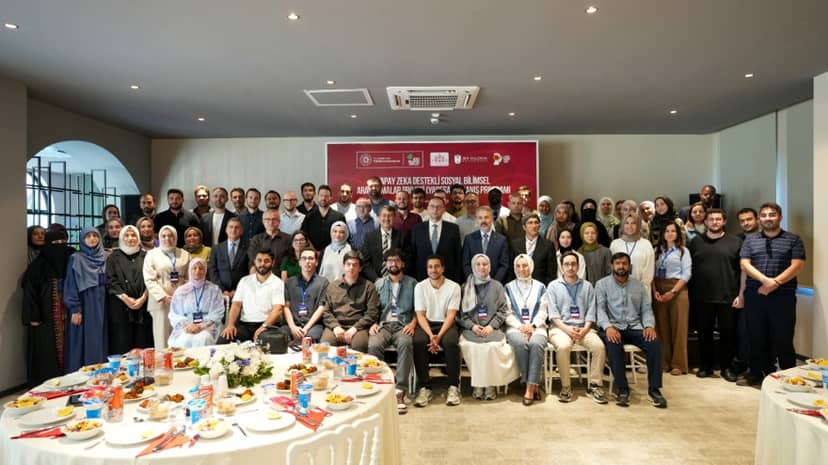
Faculty of Law Academic Dr. Gülnihal Ahter Yakacak Accepted into the COST HARPA Action Working Group

Gülnihal Ahter Yakacak, a faculty member at Ibn Haldun University's Faculty of Law, has been accepted into a working group under the COST Action “CA25153 – Human-centered Approaches to Responsible Privacy for and with AI (HARPA).”
The rapid advancement of artificial intelligence technologies and the increasing scale of personal data processing have introduced new challenges for privacy protection. HARPA brings together researchers from law, computer science, psychology, and human-computer interaction to address these challenges through interdisciplinary collaboration.
The Action aims to mitigate privacy risks associated with the use of artificial intelligence and develop practical, human-centered safeguards. Its objectives include establishing shared approaches to privacy protection, raising public awareness, and ensuring that fundamental rights are respected in the design of AI systems.
HARPA's activities are organized into four working groups focusing on empowering users to make informed privacy decisions, training professionals, evaluating privacy practices in AI development and deployment, and coordinating and disseminating research outcomes. As part of the EU-funded European Cooperation in Science and Technology (COST) Programme, this international research network provides participants with opportunities to collaborate with experts from different countries, exchange knowledge and experience, and develop new ideas for international research projects.
At the Project Support Office, we remain committed to guiding our academics through every stage of the application process, supporting their active participation in international research networks, and strengthening international research partnerships. We congratulate Gülnihal Ahter Yakacak on this significant achievement, which contributes to our University's international academic visibility and research collaborations, and wish her continued success in her work within HARPA.
Related Content
Our Vice Rector, Prof. Dr. Yeliz Bozkurt Gümrükçüoğlu, Accepted into the COST HARPA Action Working Group

Five Academics from Our University Join a Project on Digital Transformation in the Judiciary
Vice Rector Prof. Dr. Yeliz Bozkurt Gümrükçüoğlu Accepted to a Working Group of the COST ELDA Action

Faculty Member Dr. Serdal Tümkaya Accepted to a Working Group of the COST KGELL Action
“Digital Vulnerability” Project Receives TÜBİTAK 3005 Funding

Erasmus+ KA220-YOU Support from the Turkish National Agency for the PeerMed4Youth Project
International Collaboration on AI-Supported Teacher Education under Erasmus+ KA220: The AI4PD Project
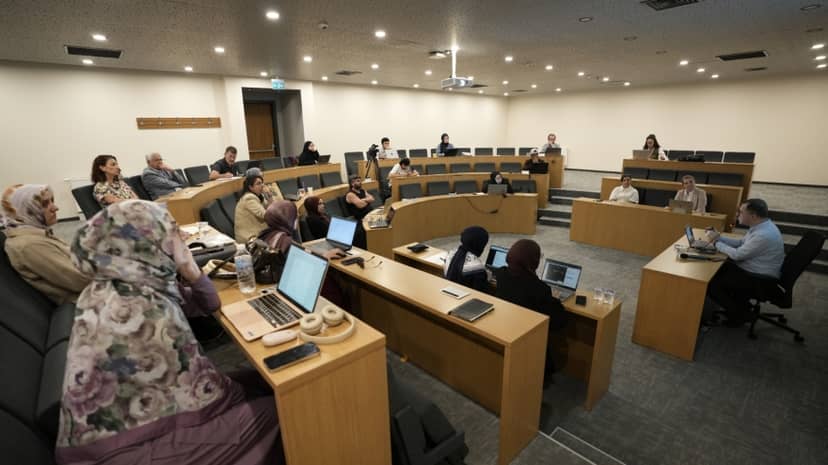
Strategic Expansion into European Research Networks: COST Training Held